

You are on the train home, and the evening you had been looking forward to is no longer happening. The message came at four, short and polite, something about a hard week, and it did not offer another day.
It is a small disappointment. You know that. You tell yourself you are not going to make it bigger.
Then a video appears about how people behave when they are losing interest, and you watch it to the end.
By the time the train reaches your stop, there are more. A man counting the signs on his fingers. A woman explaining that people make time for what they want. A row of strangers in the comments, every one of them certain.
You step onto the platform knowing far more about people who leave than you did twenty minutes ago, and feeling far worse about someone who has only cancelled one dinner.
What the feed was doing while you watched
It can feel as if something has been listening. In a way, something has.
Not the way a friend listens, with some care for how you will sleep tonight. A feed listens through behaviour. It notes what you pause on, what you watch twice, what you save and what you come back to the next evening.
It has never met you. It knows what your thumb does when you are sad.
And it is not asking whether the next video will help you love anyone well. It is asking, in effect, whether you will keep watching.
You did. So it offered more of the same, a little sharper each time.
Here is the part that changes how the whole evening looks. Your feed shows you what you paused on, and that is not the same as what is true.
One video watched to the end is not a fact about the person who cancelled. It is a fact about what caught you on a tired evening.
Your feed shows you what you paused on, and that is not the same as what is true.
How a fear starts to sound like the world
One video would not matter much. Repetition does the work.
The same idea arrives tomorrow in a different voice, with different music and better lighting. Then again the night after. A stranger tells a story close enough to yours. Someone gives your worry an impressive name.
After a while you are no longer wondering about one cancelled dinner. You are living inside a whole view of love, repeated so quietly that it stops sounding like an opinion.
That people leave.
That a slow reply is an answer.
That steady means dull.
That you were right to be afraid.
And because it reaches you from outside, in so many voices, it feels as if the world agrees with you. It is not the world. It is one feed, repeating what held your attention.
Some of what you see will be true for someone. People do lose interest. Some slow replies do mean what you fear. But a truth repeated without proportion bends into something else, and you can end up carrying it into a conversation where nothing of the kind has happened.
The phone is not the villain
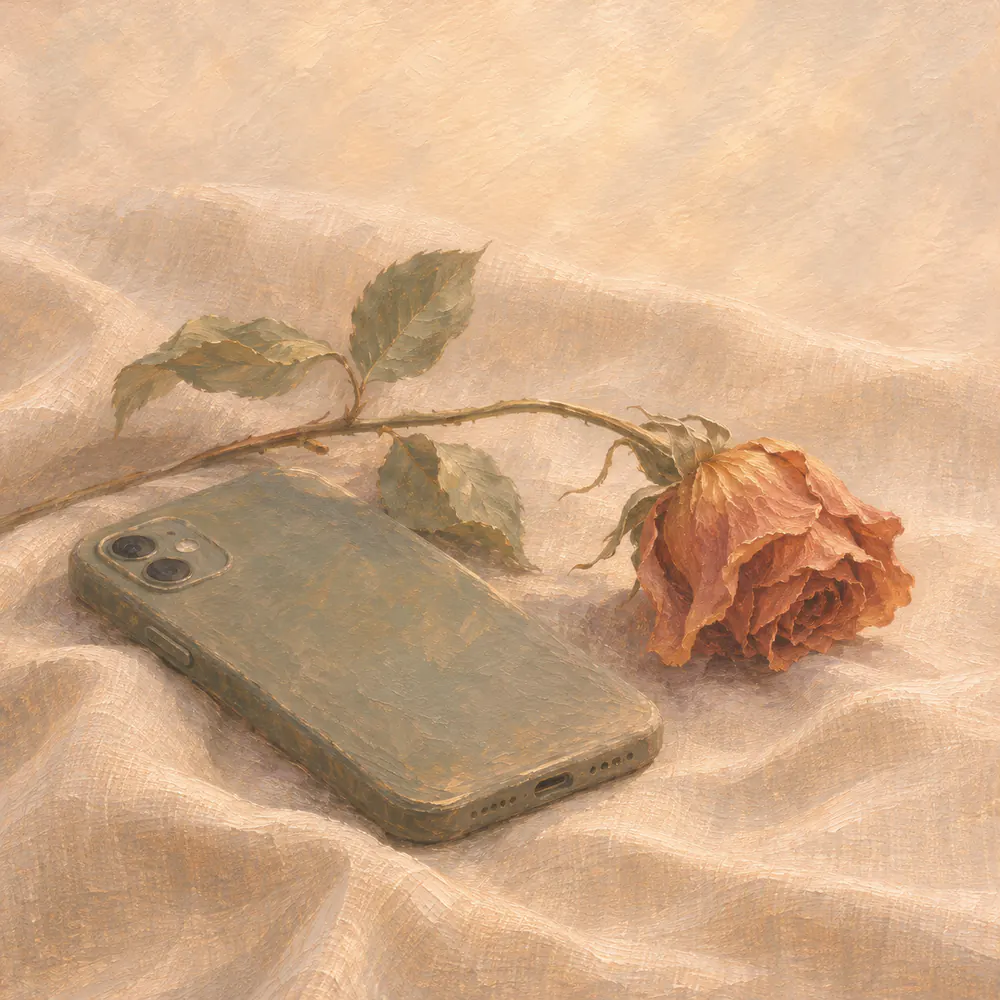
It would be simple to blame the phone. But technology is not the villain in this story. Unconsciousness is. That means taking in whatever arrives, half asleep, from something that is paying very close attention to you.
You are not weak for being caught, either. You were tired and a little hurt, and you were holding something built to notice exactly that.
There is a trap on the other side as well. Once you see how a feed works, you can tip over into suspicion, where every app is poison and every post is a lie.
Paranoia says, 'Everything on this screen is dangerous.'
Awareness says, 'This shapes me, so I will pay attention to how I use it.'
Paranoia says, 'I must delete all of it or I have failed.'
Awareness says, 'It influences me, and I still get to choose.'
We are not trying to become afraid of the phone. We are trying to be awake while holding it.
Feedback, not fate
Here is a steadier way to hold all this. What your feed shows you is feedback. It is bent by what sells and by what you clicked when you were low, but it is still only feedback. It is not fate, and it is not a reading of your future.
It learned from a few tired evenings. So it can tell you where your attention went. It cannot tell you what love is.
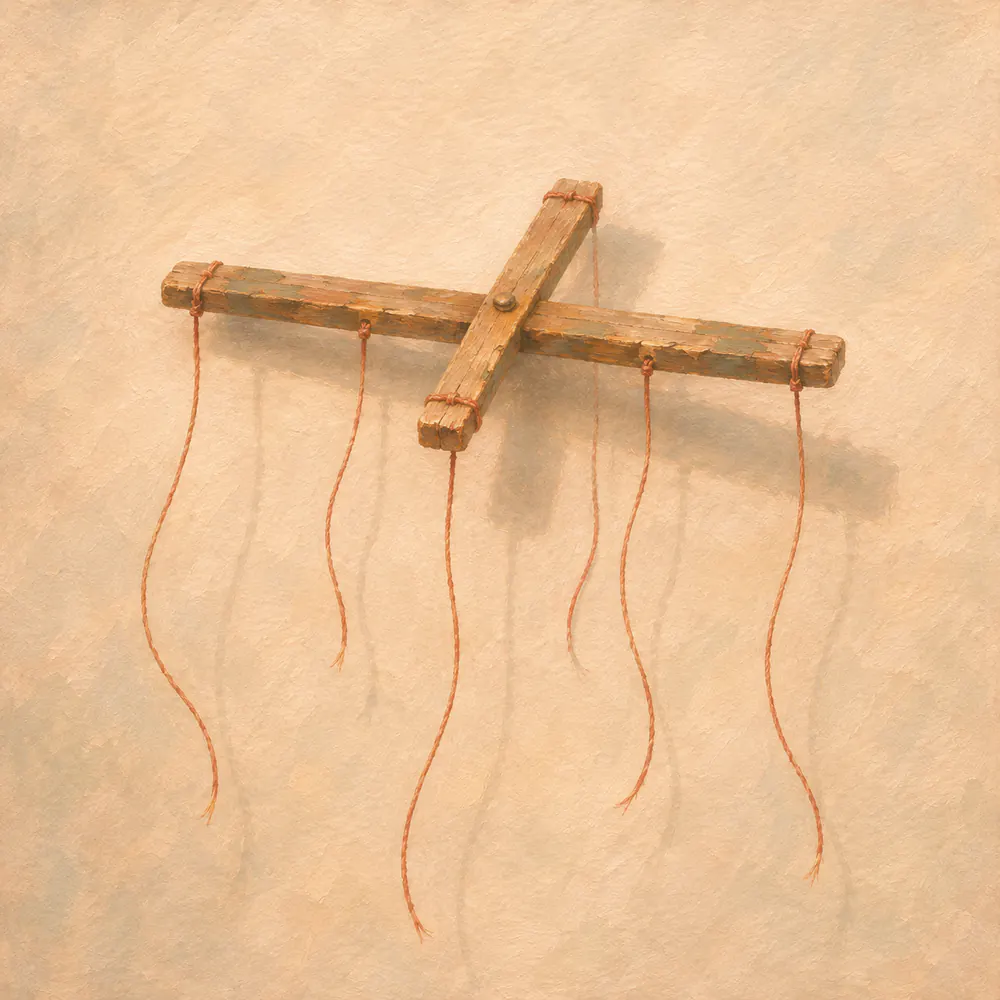
The maze has not closed around you. It has been showing you one corridor, again and again.
So the work is small, and it begins before the next video. A few seconds. One breath, with your thumb still above the screen. One question. 'What has actually happened?'
On the train, the honest answer was short. Someone cancelled one dinner in a hard week. Nothing else.
Then notice what the twenty minutes did to you. Clearer, kinder, steadier? Or more suspicious, more restless, more certain about someone you have not yet asked?
When you catch the loop, say so. 'This is the loop.' You will not catch it every time. Catching it sooner is enough.
And then do the plain thing a feed can never do for you. Ask them. 'Shall we find another evening?' Their answer will tell you more than a hundred confident strangers.
Questions to sit with
- What kind of content about love appears most often in your feed at the moment?
- Which feeling does your phone seem to know how to find?
- Which piece of advice made you feel powerful while you watched it and less peaceful an hour later?
- What belief about love keeps being handed back to you, and how old is it?
- Does your feed leave you more curious about the people in your life, or more certain about them before you have asked?
One small step
For the next three evenings, before you put your phone down, write one line that finishes this sentence. 'Today my feed told me that love is...' Do not tidy it. 'Something people fall out of without warning.' 'A competition I am losing.' 'Only real when it is intense.' Whatever the day's videos and posts added up to.
On the fourth evening, read the three lines together and ask two things. Do I believe this? And was this belief mine before my feed began repeating it?
You do not have to change anything yet. Seeing what your corner of the maze keeps showing you, in three plain lines, is the step.

Filed underAI, Social Media & Love · Algorithms · Social Media · Awareness
Keep reading
More from The Untangled Blog
Manipulation & Self-Trust
That Unsettling Feeling You Cannot Quite Name
The first sign may not be proof. It may be the feeling that something here is not right. How to listen to that feeling without panic, and without talking yourself out of it.
5 min read · May 1, 2026

Womanhood & Homecoming
When the Life That Looks Right Does Not Feel Like Home
You did what you were supposed to do, and people tell you how well it turned out. If part of you still feels far from home, that is not ingratitude, and it does not mean your life has to be torn down.
6 min read · November 18, 2026
Womanhood & Homecoming
The Scripts You Never Chose
The fairy tale, the girlboss, the perfect body, the good daughter. Each script promised you something real. The question is not which one is correct, but whether you ever chose the one you are living by.
6 min read · November 18, 2026

Get new essays in your inbox
A short note when a new essay is published. Nothing in between.